
Case Study: Sewage Backup — North American Monsoon Surcharge, South Jordan
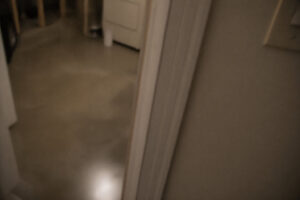
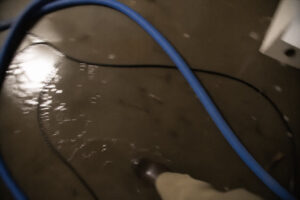
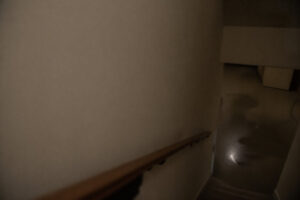
Event date: August 2023 | Property: 1990s-era two-story with finished basement, near 1300 West, South Jordan | Event type: Category 3 sewage backup from North American Monsoon sewer main hydraulic surcharge | Duration: Active backflow for approximately 40 minutes during the storm event; standing water contact approximately 3 hours before homeowner discovered event | Insurance carrier: Bear River Mutual HO-3 with sewer backup endorsement | Approved amount: $14,200 | Deductible: $1,000
What Happened
In August 2023, a North American Monsoon convective storm delivered approximately 1.4 inches of precipitation to southwest Salt Lake County in under 90 minutes — a rainfall intensity sufficient to overwhelm the hydraulic capacity of South Jordan’s municipal sewer collection mains in the lower-elevation western corridor near 1300 West. When the sewer main pressure exceeded the elevation of the lowest connected below-grade fixtures in homes along this corridor, sewage backflowed through those fixtures and into the finished living spaces below.
The dual-fixture simultaneous backflow pattern — the basement floor drain and the basement bathroom toilet backflowing at the same moment — confirmed sewer main hydraulic surcharge rather than a localized lateral blockage. A localized blockage would have affected one fixture, not both simultaneously. The homeowner had been watching the storm from her second-floor window, had not been in the basement, and discovered the event approximately three hours after it began when she went downstairs to check. Around 4 inches of Category 3 sewage-contaminated water flooded an area of 220 square feet in the finished basement family room. Hydrogen sulfide was detectable from the staircase landing before entry.
What We Did
Before any personnel entered the affected space: hydrogen sulfide assessment with a calibrated monitor at the staircase landing. The H₂S reading was 8 parts per million — below the OSHA permissible ceiling of 20 ppm but sufficient to require respiratory protection given the duration of potential exposure during the work scope. Full PPE deployed at the containment boundary: powered air-purifying respirators with P100 and organic vapor cartridges, double-gloved nitrile, sealed Tyvek coveralls. HEPA air scrubbers established in negative air pressure mode at the staircase entry before any equipment entered the affected space. Containment barrier at the staircase landing to prevent cross-contamination of the unaffected upper levels.
Carpet, pad, and the lower 10 inches of drywall on three perimeter walls were removed within the containment zone and double-bagged for regulated waste disposal. Three passes of EPA-registered broad-spectrum disinfectant at required concentration and minimum 15-minute dwell time were applied to the concrete floor and all exposed framing and masonry surfaces. Structural drying equipment ran for six days. All 22 monitoring points confirmed dry standard on day six.
During the post-extraction FLIR thermal imaging scan conducted as drying equipment was being placed, we identified a separate pre-existing cold zone on the northeast basement wall — chronic Lake Bonneville clay cold joint seepage moisture at 19% to 23% framing moisture at four additional points, unrelated to the sewage event and present before the event. This was documented separately for the homeowner with specific readings and a professional recommendation for interior drain tile assessment before the following spring. It was not included in the Bear River Mutual claim scope.
Insurance Outcome
The Bear River Mutual HO-3 policy, which includes coverage for sewer backup, provided protection for the incident. Total approved: $14,200. Deductible: $1,000. The sewer backup endorsement is a specific add-on rider that many homeowners do not know they need until an event makes them realize their base HO-3 policy does not cover sewage backup. The base HO-3 policy covers sudden and accidental water damage from internal supply line failures. It does not typically cover sewage backup or overflow from a drain, sewer, or septic system without the endorsement. If this homeowner had not had the sewer backup endorsement, the $14,200 project would have been entirely out-of-pocket.
The Retired Teacher
She had lived in the house for 22 years. She had raised three children in that basement family room, held a book club there every other Wednesday for a decade, and refinished the flooring herself in 2015 after the last child left for college. She stood in the driveway while we worked and mentioned none of this to us — but she told us at the project close walkthrough two weeks later, standing in the rebuilt basement with new luxury vinyl plank flooring in a pattern she had always preferred but never gotten around to choosing. She said it looked better than it did before the backup. We informed her that the pre-existing seepage on the northeast wall would need to be addressed before next spring. She scheduled the waterproofing contractor the following week. That was the right outcome.
Frequently Asked Questions
- Does standard homeowners insurance cover sewage backup?
- A standard HO-3 policy typically does not cover sewage backup without a specific endorsement — sometimes called a sewer backup rider or a water backup and sump overflow endorsement. This endorsement is usually inexpensive relative to the coverage it provides. A sewage backup event without the endorsement is typically entirely out-of-pocket. If you are not sure whether your policy includes it, check your declarations page now — not after an event.
- What is the dual-fixture simultaneous backflow pattern?
- When sewer main hydraulic surcharge occurs, the main pressure rises above the elevation of the lowest connected fixtures. Both the basement floor drain and the basement toilet backflow simultaneously. This simultaneous dual-fixture pattern distinguishes sewer main surcharge from a localized lateral blockage — a localized blockage affects one fixture or one section of the lateral, not all below-grade fixtures at the same moment.
- Is it safe to stay in the home during sewage cleanup?
- If the affected area is isolated to a basement with containment established and HEPA air scrubbers in negative air pressure mode, the upper levels may be occupiable. For larger Category 3 events or events where the affected area cannot be effectively contained, temporary relocation is advisable. We assess specific conditions on arrival and provide a specific recommendation.
- What causes North American Monsoon sewer surcharge in South Jordan?
- The North American Monsoon pattern from July through September delivers Gulf of California moisture flow to the Salt Lake Valley in the form of intense convective precipitation — 1 to 2 inches in under 90 minutes during significant events. This precipitation volume enters the storm water and sanitary sewer systems faster than the collection mains can convey it, causing hydraulic surcharge that reverses flow through the lowest connected fixtures in affected homes. Properties in the lower-elevation corridors of South Jordan, west of Bangerter Highway, are at higher risk during significant events.
← All Case Studies | Get Help Now →
True Day Water Damage Restoration | 11268 S 2865 W, South Jordan, UT 84095 | (385) 247-9359 | Utah Contractor License: #960332-3505 | IICRC Firm ID: #927354-5258
Were we your crew on a water-damage job?
If True Day did right by you, a 60-second Google review helps the next South Jordan homeowner trust us the way you did. Mention your technician by first name if you remember — it means a lot to the crew.
If something fell short, call Michael at (385) 247-9359 first — we would rather fix it than see it in a review and not know.
About True Day’s case studies
Every case study published on this site is a real True Day job. Here are the rules we hold ourselves to when we write one up:
- First names only — no last names on this page, no addresses, no identifying details
- No homeowner faces in photos without signed consent
- No stock photography — every image is from the actual job (or an equipment stand-in from our own fleet, labeled)
- Scope language matches the actual IICRC Category and Class we drew on inspection
- Day counts reflect the real days from arrival to equipment pull — not a target, not a brochure number
- Moisture-log and photo file is retained for 7 years and can be shared with your insurance carrier if your claim parallels one of these cases
If you want to verify a case study, ask: (385) 247-9359. Michael Bass can walk through the file with the customer’s name redacted — and often connect you to the customer directly if they have agreed to be a reference.
How a sewage backup in a basement actually unfolds — and what we do at each stage
Sewage backup is one of the few water losses with a legally-regulated response pattern (IICRC S500 Category 3 + OSHA 1910.1030 bloodborne-pathogen touch-points). The six-stage sequence below is what the first eight hours look like for us on-site — everything above the surface a homeowner sees, and the work below it that most people don’t.
First symptom — usually the basement floor drain
Water rising at the basement floor drain, downstairs toilet, or utility-sink standpipe. The water is usually gray-brown with visible solids and a distinct sewage odor. If every lower drain is affected simultaneously, this is likely a municipal mainline event (see our mainline vs lateral framework).
Stop the inflow
Our crew calls or coordinates with South Jordan City Public Works if the backup is mainline; a plumber camera-scopes the lateral if private. Nothing on our side moves water around until the inflow is identified and stopped — moving contaminated water during active backflow spreads it.
Containment and PPE
Negative-air containment staged at the basement entry (not just the affected room). Full PPE for crew. HEPA scrubbers running continuously inside containment. This is standard IICRC S500 Category 3 scope with Marcus (AMRT #246893) or Sofia (AMRT #305127) credentialed on-site.
Extraction and non-salvageable removal
Contaminated water extracted and discharged to a sanitary line (never storm drain). Mandatory removal of affected porous materials: carpet, carpet pad, lower drywall, baseboard, insulation. Documented item-by-item for the carrier. Non-porous surfaces are cleaned, not removed.
Cleaning and antimicrobial
Remaining surfaces wet-wiped with EPA-registered accelerated hydrogen peroxide. HEPA vacuum on everything in the affected zone. Floor sealed on exposed concrete after cleaning. Air stays under negative pressure through this stage.
Verification and clearance
Final HEPA pass, moisture-reading check, visual verification. Containment stays up until clearance is confirmed. We document the whole sequence with photos for the carrier claim file.
Sewage backup in a South Jordan basement — scenario walkthrough
This describes the type of loss, not a specific customer. SJ basement sewage backups have a signature pattern driven by city sewer infrastructure, lot elevations, and finished-basement construction.
Why these happen in SJ
Three main drivers: (1) mainline block downstream of your lateral — typically tree-root intrusion in older SJ neighborhoods or grease buildup in mainlines, with backup pushing up through the lowest fixture in your home (often the basement floor drain); (2) lateral-line failure on your property — cracked clay or orangeburg lateral, requires excavation to repair; (3) heavy-storm overload of the sewer system where sanitary and storm share lines, pushing combined flow up into homes.
Our Cat 3 protocol on an SJ basement backup
- Minute 15: Containment first — plastic sheeting across the basement doorway, HEPA-filtered negative-air to isolate contaminated area
- Hour 2: Full PPE extraction with dedicated sewage-rated equipment. Documentation of source (mainline vs. lateral vs. storm) for insurance claim.
- Day 1: Structural removal of all porous materials below water line — carpet, pad, drywall bottom 2+ ft, insulation, particleboard subfloor if present. Anything porous that contacted Cat 3 water goes.
- Day 2-3: EPA-registered antimicrobial on all remaining structure. Structural drying.
- Day 3-5: Post-remediation verification before reconstruction. Moisture readings matching unaffected baseline; antimicrobial efficacy confirmed.
- Day 5+: Reconstruction under our Utah GC license — new flooring, drywall, trim, paint. Full close-out with 2-year warranty.
Insurance note
Sewage backup is a separate rider on most Utah homeowner policies. If you added the rider, covered. If not, the city may share responsibility only when source is proven to be their mainline, not your lateral.
Facing something similar? Call (385) 247-9359 — live-answered 24/7. In South Jordan, we’re on site within 45 minutes or your emergency inspection is free.
Facing a sewage backup? Call (385) 247-9359 — live-answered 24/7.