
Water damage insurance claims: sudden and accidental water damage is commonly covered. True Day bills your carrier directly in Xactimate for the approved scope; you pay your deductible and anything your policy excludes. The inspection is free. Live-answered 24/7 from South Jordan, UT.
Water Damage Insurance Claims Assistance in South Jordan, UT
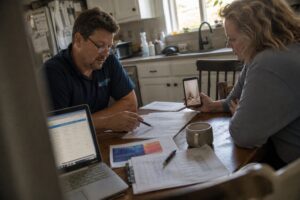
How True Day handles the insurance side of your restoration.
The Policy Language That Determines Everything
Before discussing what we do, it is worth understanding the homeowner’s property insurance provisions that govern water damage claims — because the outcome of your claim often depends less on what happened than on how what happened is described within your policy’s definitions.Sudden and Accidental vs. Gradual Damage
Standard homeowner’s insurance policies — typically HO-3 open-peril forms or HO-5 comprehensive forms — cover sudden and accidental water damage but exclude damage caused by continuous or repeated seepage, gradual leakage, and maintenance neglect. The distinction matters enormously for South Jordan properties specifically. A washing machine supply hose that bursts over a weekend is sudden and accidental. The same hose that dripped behind the machine for six months before developing a full failure is gradual — and insurers have denied coverage on that basis even when the homeowner was unaware of the slow leak. Hard water scale from the Jordan Valley Water Conservancy District’s culinary supply — which runs at 7 to 10 grains per gallon of dissolved calcium and magnesium — accelerates the degradation of supply line fittings and water heater connections over years of use. When those fittings fail suddenly, the event is typically covered as a sudden and accidental loss. The scale buildup that caused it is not relevant to coverage — the failure mechanism is. Understanding this distinction is how we frame our documentation from the first on-site assessment.Flood Exclusions and the National Flood Insurance Program
Standard homeowner’s policies universally exclude flood damage — defined as surface water intrusion, overflow of a body of water, and mudflow. Groundwater seepage from hydrostatic pressure against a foundation wall during spring snowmelt from the Wasatch Range is typically treated as groundwater flooding rather than sudden water damage, and is excluded from standard coverage. Properties in South Jordan that face recurring hydrostatic pressure events may require separate flood insurance through the National Flood Insurance Program administered by FEMA, or through private flood insurance carriers. The distinction between an internal plumbing failure and groundwater intrusion is not always obvious — and adjusters do not always get it right on the first assessment. We have seen internal sump pump failures characterized as groundwater flooding events, which shifted coverage denial onto events that were actually covered losses. Our documentation of the water source — the failed pump, the broken discharge line, the valve failure — is what establishes the correct classification.Sewer Backup Endorsements
Sewage backflows — Category 3 black water events that occur in South Jordan basements when municipal sewer collection systems experience hydraulic surcharge during monsoon rainfall — are not covered under standard homeowner’s policies unless a specific sewer backup endorsement has been added to the policy. This endorsement is available from most carriers and is relatively inexpensive, but many homeowners do not carry it. If you discover during a sewage backup that you do not have this coverage, we document the full scope of work for any portion that may be covered under other provisions and help you understand the out-of-pocket costs clearly before work begins. Learn more about our sewage cleanup services.Duty to Mitigate
Nearly every homeowner’s property insurance policy contains a Duty to Mitigate provision — a clause requiring the policyholder to take reasonable steps to prevent additional damage after a covered loss. Calling True Day Water Damage Restoration immediately is documented proof that you fulfilled this obligation. Waiting days to begin mitigation, or attempting inadequate DIY cleanup that allows mold amplification to begin in damp structural materials, can give the insurer grounds to dispute coverage for secondary damage that developed after the initial loss. The moment you call us, we begin creating the timestamped documentation that establishes your mitigation timeline.What We Document and Why It Matters
Insurance adjusters work from documentation. An adjuster who cannot see the moisture inside your wall cavity — because the thermal imaging was never done, or the readings were never recorded — cannot approve coverage for the drywall removal needed to access and dry that cavity. A claim that is underdocumented is almost always an underpaid claim. Our documentation process produces a complete evidence package that begins before any extraction equipment is placed and continues through final drying verification:FLIR Thermal Imaging Report
Thermal imaging cameras detect the temperature differential created by evaporative cooling on wet material surfaces — revealing moisture migration inside wall cavities, beneath flooring assemblies, and above ceiling panels that are invisible to visual inspection. Every project begins with a systematic thermal imaging scan of all affected and potentially affected areas. The resulting thermal images are timestamped, annotated with the location and suspected moisture pathway, and included in the documentation package provided to your adjuster. Without this documentation, an adjuster assessing visible damage only will miss what is behind the walls — which is frequently where the most significant restoration work is needed.Calibrated Moisture Meter Readings
Thermal imaging identifies suspected wet areas. Calibrated penetrating moisture meters confirm them — measuring the actual moisture content of wood framing, gypsum drywall, concrete subfloor, and other structural materials at each flagged location, expressed as a percentage that can be compared against the IICRC S500 dry standard for that material. These baseline readings, taken before drying begins, are the objective evidence of the scope of structural saturation. Without them, there is no documented starting point against which to measure the completion of drying — and no defensible justification for the drying equipment duration that your claim will need to cover.Daily Drying Logs
Every day our drying equipment is in your home, our technician records temperature, relative humidity, and moisture content readings at all established monitoring points. These daily logs demonstrate two things your adjuster needs to confirm: that the drying equipment was necessary and that it was working. They also establish when drying was verifiably complete — protecting you from the scenario where an adjuster questions whether equipment ran longer than necessary.Photographic Documentation
We photograph all affected areas systematically at each phase of the project — before any materials are moved or removed, during extraction and demolition, during the drying phase, and upon completion. Photographs are timestamped and organized by room and phase. For adjusters at carriers like Bear River Mutual and Farmers who rely heavily on photographic evidence in the initial review, the quality and completeness of this documentation frequently determines how much of the scope is approved without supplemental negotiation.Xactimate-Format Scope of Work Estimate
The restoration industry — and the insurance industry — uses Xactimate estimating software as the standard format for scope of work and cost documentation. Estimates prepared in Xactimate are formatted in the line-item structure that adjusters are trained to evaluate, with pricing based on regionally adjusted unit cost databases that reflect local material and labor costs in the Salt Lake Valley. Our scope estimates are prepared in this format, which reduces the friction in the adjuster review process and minimizes the back-and-forth that delays claim approval when documentation is in a non-standard format.How We Handle Your Water Damage Insurance Claim
The documented process True Day Water Damage Restoration uses from the first call to the final insurance payout — written down so you know exactly what to expect at each step.
Most restoration companies say they “work with insurance.” Few explain what that actually means. This page is our documented claim workflow. If your insurance carrier or adjuster asks what documentation we provide, point them here.The 6-Step Claim Workflow
1 Moisture Mapping and Photo Documentation
On arrival, we photograph every wet area before anything moves. We scan the full affected zone with FLIR thermal imaging and record pinless-moisture-meter readings on each wall, each affected material, and each adjacent dry area for baseline comparison. The moisture map and before-photos become the first attachment to your insurance claim.2 Preliminary Scope in Xactimate
Before any demolition or drying work begins, we prepare a written preliminary scope in Xactimate — the industry-standard estimating software your insurance adjuster uses. Xactimate’s regional unit prices come from a database your carrier already relies on, so our scope and the adjuster’s scope start from the same baseline. You see the scope in writing before you authorize work.3 Daily Drying Logs
During structural drying (typically 3-5 days), we record moisture-meter readings on wall framing, drywall, subfloor, and any affected material every 24 hours. The daily log shows the drying trend over time. We share the readings with you daily, and the full log is submitted to your adjuster as part of the drying-completion documentation.4 Direct Insurance Billing
True Day bills your insurance carrier directly for the Xactimate-approved scope. You do not pay True Day and then wait to be reimbursed. On covered claims, your out-of-pocket cost is your policy deductible, nothing more. We handle the paperwork submission, adjuster communication, and payment processing.5 Supplements for Hidden Damage
When demolition opens walls, floors, or ceilings and we find damage that was not visible on the first inspection, we file a supplement — a formal request to add scope to the original Xactimate estimate with photos, moisture data, and justification. Supplements are a normal part of insurance work. Most jobs over $10,000 have at least one. You still pay only your deductible regardless of how many supplements are filed.6 Final Documentation and Payout
At job completion, we provide the final documentation package: completed Xactimate invoice, all moisture logs, before/during/after photos, warranty certificate, and lien release (if required). The carrier releases the remaining Replacement Cost Value payout once proof of completion is submitted. Timeline from completion to final payment typically runs 2 to 6 weeks depending on carrier.Insurance Carriers We Commonly Bill
True Day has handled claims from all major homeowner insurance carriers operating in Utah. We are not part of any carrier’s preferred vendor network — you select True Day, and we work for you, not for the insurer.What to Send Your Adjuster
When you file a water damage claim, the carrier assigns an adjuster who determines coverage and scope. Giving your adjuster the right documentation up front shortens the claim cycle and reduces disputes.A one-page PDF checklist of everything to send your adjuster to speed your claim.
Download the PDF ChecklistCommon Insurance Questions
Will my premium go up if I file a claim?
Depends on your carrier, your claim history, and the loss size. For context: a single water damage claim rarely triggers a premium increase on its own, but two or more water claims within 5 years often does. On losses under $4,000, filing may not be worth the premium exposure. On larger losses, filing is almost always worth it. Your agent can tell you how a specific claim will affect your policy.What if my carrier pushes me to use their “preferred vendor”?
You have the right to choose your own restoration contractor. The preferred vendor works for the carrier, not for you. Say politely: “I have selected True Day Water Damage Restoration, licensed in Utah and IICRC Certified. Please send the adjuster to meet them at the loss.” That ends the conversation on vendor selection.What if the adjuster’s scope is lower than True Day’s scope?
We file a supplement with photos, moisture data, and justification for each disputed line item. Most scope disputes resolve at this step. If not, we request a desk review from the carrier’s claims supervisor or invoke the appraisal clause in your policy. We advocate for you throughout, but we cannot guarantee the carrier approves every disputed line.How long does the whole claim process take?
Typical timeline for a residential water damage claim: adjuster inspection within 48-72 hours of filing, initial scope approval within 1-2 weeks, drying and reconstruction run concurrently with the claim (3-5 days drying, 2 days to 8 weeks reconstruction depending on scope), supplements add 1-3 weeks each, final payment release 2-6 weeks after proof of completion. End-to-end total: typically 4 to 12 weeks for most residential losses.Coverage Typically Included — and Typically Excluded
Every policy is different, and we are not insurance agents — we cannot provide binding coverage interpretations for your specific policy. What we can do is describe the patterns we observe most consistently across the South Jordan and Salt Lake County market.Generally Covered Under Standard HO-3 and HO-5 Policies
- Burst and frozen pipe failures — including the freeze-thaw induced failures common along the Wasatch Front in January and February
- Water heater failures and appliance supply line ruptures — including ice maker lines and washing machine hoses weakened by hard water mineral scale
- Ice dam water intrusion — when ice dam formation on low-slope roofs forces meltwater under roofing membranes and into ceiling assemblies
- Sudden overflow from plumbing fixtures — toilet overflows, bathtub overflows, and sink overflows when sudden and accidental
- Fire suppression sprinkler system activations — water damage from sprinkler discharge is typically treated as a covered fire-related loss
- Mitigation costs — water extraction, structural drying equipment, antimicrobial treatment, and emergency demolition are generally covered as necessary mitigation expenses
- Reconstruction — drywall replacement, flooring, painting, and similar restoration work following a covered loss
Generally Excluded From Standard Policies
- Groundwater flooding from hydrostatic pressure, rising water tables, or surface water runoff — requires National Flood Insurance Program coverage or private flood insurance
- Gradual leaks and long-term seepage — damage that accumulated over weeks or months rather than occurring suddenly
- Maintenance neglect — damage resulting from failure to maintain plumbing systems, roofing, or other property components
- Sewage backup — typically excluded from standard coverage but available as a sewer backup endorsement add-on
- Secondary water system failures — non-potable irrigation system failures may be treated as groundwater events depending on how the water entered the structure
- Mold resulting from a non-covered event — if the underlying water source is excluded, mold remediation resulting from that source is also typically excluded
Actual Cash Value vs. Replacement Cost Value — A Distinction That Affects Your Out-of-Pocket Costs
One of the most common sources of confusion and frustration in property damage claims is the difference between actual cash value and replacement cost value coverage — two fundamentally different payment approaches that produce very different settlement amounts for the same loss. Actual cash value (ACV) is the depreciated market value of the damaged property at the time of the loss — what it was worth, accounting for age and wear, not what it costs to replace it. A ten-year-old carpet that costs $4,000 to replace may be settled at $1,200 ACV after depreciation. Replacement cost value (RCV) is what it actually costs to replace the damaged item with a new equivalent. Most HO-3 and HO-5 policies offer RCV coverage for the dwelling structure, though some impose a depreciation holdback — paying ACV initially and releasing the depreciation amount as a recoverable depreciation payment after documented repairs are completed. Understanding which coverage type applies to your policy — and to each category of your loss, since dwelling and personal property may be covered differently — directly affects how you manage cash flow during the restoration period and what you can expect from the final settlement. We walk through this with every client at the documentation and scope review stage, so there are no settlement surprises after work is completed.Supplemental Claims — When the Initial Scope Is Incomplete
The initial estimate an adjuster produces is based on the information available at the time of their inspection. Adjusters often inspect before drying is complete, before demolition has revealed what is behind the walls, and before the full extent of moisture migration has been mapped. This means initial estimates are frequently incomplete — not because the adjuster acted in bad faith, but because the full scope of damage is genuinely not visible at the time of the initial inspection. A supplemental insurance claim is the formal process of submitting additional documentation to support coverage for scope items that were not included in the initial estimate. This is a standard, legitimate part of the claims process — not an adversarial escalation. We have filed supplemental claims on projects ranging from a Daybreak townhome where the initial scope missed moisture migration into three wall cavities adjacent to the original loss area, to a West Jordan commercial office where the adjuster’s initial estimate did not account for the suspended ceiling grid replacement needed to access wet structural assemblies above. Our supplemental submissions include the thermal imaging evidence, moisture meter readings, and photographic documentation that were not available at the time of the initial inspection — giving the adjuster the specific, quantified information needed to evaluate and approve the additional scope. We communicate directly with the adjuster throughout this process and track the status of each supplemental item until it is resolved.What We Do Not Do
We are a restoration contractor, not a public adjuster. There is an important distinction: a public adjuster is a licensed professional who represents the policyholder in negotiating the insurance claim settlement, charges a percentage of the settlement as a fee, and operates under a separate licensing framework. We do not hold ourselves out as providing public adjusting services, and we do not charge a percentage of your settlement. What we do is provide complete, professional, IICRC-standard restoration services and the documentation that supports coverage of those services. We communicate with your adjuster as the contractor performing the work — explaining our scope, providing supporting evidence for our cost estimates, and advocating for a complete and accurate assessment of the restoration needed. That communication is part of our service as a licensed general contractor, not a separate claims service. We also do not waive deductibles. In Utah, waiving a policyholder’s deductible is illegal under Utah Code 31A-22-301 — it constitutes a form of insurance fraud. Any contractor who offers to waive your deductible as an inducement to use their services is exposing you to legal risk, not doing you a favor. Our estimates reflect the actual cost of work performed, and your deductible is your contractual responsibility to your insurer.How Claims Work With Specific South Jordan Carriers
While every carrier handles claims differently, we have observed consistent patterns in how the major carriers serving the South Jordan and Salt Lake County market operate — patterns that affect how we structure our documentation from the outset. Bear River Mutual — Utah’s largest mutual insurance carrier and a common insurer in the South Jordan market — typically assigns dedicated field adjusters for significant losses and has a relatively structured review process. Thorough photographic documentation and a complete Xactimate scope estimate from the first submission reduce the need for follow-up inspections. Allstate and State Farm — both large direct-writer carriers with significant South Jordan market share — increasingly use virtual adjustment processes supplemented by contractor-submitted documentation. Our thermal imaging reports and moisture mapping are particularly valuable in these workflows because the virtual adjuster cannot conduct their own physical moisture assessment. USAA — which serves a significant portion of South Jordan’s military-affiliated population, given the proximity to Hill Air Force Base — is generally regarded as one of the smoother claims experiences in the market, with RCV coverage as the default and responsive adjuster communication. Xactimate format compliance is important to avoid processing delays. Farmers Insurance — which has a substantial Utah presence — tends to scrutinize the distinction between sudden and gradual damage carefully, making accurate water source documentation and loss timeline establishment particularly important from the first day of the project.First-Party Evidence: A Claim We Navigated
In January 2023, we were called to a split-entry home in South Jordan’s Harvest Village neighborhood — a 2004-era construction common to that part of the valley, with a finished lower level and a utility room housing a water softener, water heater, and washing machine on the lower entry floor. The homeowner had come home after a weekend trip to find the washing machine supply hose had failed at the hot-side braided stainless fitting — a failure mode we see regularly in homes supplied by the Jordan Valley Water Conservancy District’s hard water, where calcium and magnesium scale accumulates inside the female compression fitting over years and eventually causes the brass ferrule to fracture under line pressure. The water had run for approximately 36 hours. In South Jordan’s Daybreak community specifically — where contemporary craftsman and modern farmhouse architectural styles dominate, many with second-floor laundry rooms positioned directly above finished lower levels — we routinely use thermal imaging to trace washing machine supply line failures through the subfloor assembly into the ceiling drywall of the room below. The finish quality in these homes creates a deceptive visual — premium LVP flooring and painted drywall show no surface distress while the OSB subfloor and wall framing behind them are reading well above dry standard. Without thermal imaging, that scope never makes it into the claim. The homeowner’s carrier — a national direct writer — dispatched a virtual adjuster who reviewed the homeowner’s own cell phone photographs and issued an initial estimate within 72 hours. The estimate covered replacement of the laminate flooring in the utility room, labor to move the appliances, and a single drying equipment line item for a three-day equipment set. Total initial estimate: $2,847. Our thermal imaging scan on day one told a different story. The evaporative cooling signature on the infrared camera showed moisture in the lower section of four framed wall cavities adjacent to the utility room — including the shared wall with the finished bedroom, where the homeowner had already re-hung a picture and assumed the wall was fine. Calibrated penetrating moisture meter readings at 22 monitoring points confirmed saturation in the OSB subfloor beneath the laminate, in the bottom 18 inches of the drywall in all four cavities, and in the engineered hardwood flooring in the bedroom that shared the wet wall. The moisture content in the bedroom’s wall framing was reading 28% — against a dry standard of 12% to 16% for Douglas fir framing in this climate zone. At 28%, active mold germination on the wood fiber surface was already statistically likely. We submitted a supplemental claim package to the adjuster within 48 hours of our initial assessment. The package included: annotated FLIR thermal images of all four wall cavities with moisture pathway notation, the full 22-point moisture meter log with material-specific dry standard comparisons, a revised Xactimate scope covering demolition of 94 square feet of drywall across three rooms, removal and replacement of the bedroom’s engineered hardwood floor, additional drying equipment for a seven-day cycle rather than three, and EPA-registered antimicrobial treatment of all exposed framing. We included a written narrative explaining the fracture mechanics of the brass compression fitting and the timeline of moisture migration from the utility room to the adjacent framing — establishing both the sudden-and-accidental cause and the physical pathway that justified the expanded scope. The supplemental was approved in full within six business days, without a physical reinspection. The final approved claim totaled $9,614 — approximately 338% of the initial estimate. The homeowner paid only their $1,000 deductible. The bedroom wall and floor were restored to pre-loss condition, and a post-drying moisture verification confirmed all 22 monitoring points had returned to the 12% to 15% equilibrium range before reconstruction began. The homeowner later told us she had almost signed off on the original $2,847 estimate because she assumed that was simply what it cost. The wall cavity moisture — the part that would have produced mold in the bedroom within weeks — would never have been addressed. That outcome, more than the dollar figure, is what complete documentation actually protects.Frequently Asked Questions — Insurance Claims
Does homeowner’s insurance cover water damage restoration in South Jordan?
Most standard homeowner’s policies cover sudden and accidental water damage — burst pipes, appliance failures, ice dam intrusion. Gradual leaks, groundwater seepage, and sewage backup are typically excluded unless specific endorsements are carried. South Jordan-specific causes — hard water scale failures, secondary irrigation system backflows, sump pump failures — fall into different coverage categories depending on how the event is classified and documented. We help establish accurate classification from the first assessment. See our full coverage breakdown above.Should I call my insurance company or a restoration company first?
Call us first at (385) 247-9359. Stopping ongoing damage and beginning documented mitigation is your most urgent priority — and your policy’s Duty to Mitigate clause requires it. We help you initiate the insurance notification process with the documentation your carrier needs from the start.What if the adjuster’s initial scope is less than what is actually needed?
We file a supplemental claim with supporting thermal imaging, moisture meter data, and photographic evidence documenting the additional scope. This is a standard part of the process, not an adversarial action. Initial estimates based on visual inspection frequently miss hidden moisture — which is exactly what our thermal imaging and calibrated moisture mapping is designed to find and document.What is the difference between actual cash value and replacement cost value?
ACV pays the depreciated market value of damaged materials — what they were worth before the loss. RCV pays what it costs to replace them with new equivalents. Most standard HO-3 and HO-5 policies offer RCV for the dwelling structure, though some issue an ACV payment initially and release recoverable depreciation upon proof of completed repairs. Understanding which applies to your policy affects your cash flow expectations during restoration.Related Services
- Water Damage Restoration
- Emergency Water Damage Services
- Our Restoration Process
- Moisture Detection
- Structural Drying
- Water Extraction
- Basement Flooding Cleanup
- Mold Remediation
- Sewage Cleanup
- Fire Damage Restoration
- Reconstruction & Repairs
- Water Damage Restoration Cost Guide
- Our Credentials
Contact True Day — South Jordan’s Licensed Restoration Contractor
If you are dealing with active water damage and an open insurance claim — or if you are trying to understand what a claim will look like before you file — call us directly. We have worked this process hundreds of times across South Jordan and Salt Lake County. The documentation starts when we arrive, not when the adjuster does. True Day Water Damage Restoration 11268 S 2865 W, South Jordan, UT 84095 Phone: (385) 247-9359 Email: info@truedaywaterdamagerestoration.xyz Utah Contractor License: #960332-3505 IICRC Certified Firm ID: #927354-5258Pay Over Time Through Wisetack — No Hit to Your Credit to Check
Insurance covers most restoration jobs. For the deductible, non-covered scope, or jobs filed out-of-pocket, True Day offers financing through Wisetack — a homeowner-friendly lender with soft-credit prequalification (checking your rate does not affect your credit score).
Your True Day project manager can prequalify you in a few minutes during the written-scope visit. Nothing to sign on the spot.
About Wisetack: loans are issued through independent lending partners. Rates and approval depend on your credit profile. Prequalification is a soft inquiry; final approval may involve a hard inquiry. True Day does not profit from or receive referral fees for financing.
We bill your insurance directly
You handle the claim once — the first call. Everything after that is our job.
- Photographic documentation of every affected area, saved with timestamps and the dated moisture reading alongside it.
- Daily moisture logs for the full drying phase, kept in writing so the file never has a gap.
- Xactimate-format scope of work and line-item estimate written for your adjuster’s software — not a PDF they have to retype.
- Direct coordination with your adjuster: scope changes, supplements, and billing go to them, with you copied on every email.
- Submission of the final invoice directly to your carrier once the file closes.
If your policy covers the claim, you pay only your deductible. If any part of the loss isn’t covered, we walk you through what and why before any work on that portion begins — no surprise invoice at the end.
The claim-denial trap: “sudden and accidental” vs. “long-term seepage”
Most Utah homeowners policies cover water damage that is “sudden and accidental” — and specifically exclude damage caused by “continuous or repeated seepage over 14 days or more.” This is the single most common reason a water-damage claim gets denied, and it almost always catches homeowners by surprise. Here’s where the line is.
| Scenario | Typically covered as “sudden and accidental” | Typically excluded as “seepage” or “maintenance” |
|---|---|---|
| Burst pipe | A supply line that fails abruptly — a split, a fitting blowout, a frozen-pipe rupture. | A pipe that has been slow-dripping behind a wall for weeks and finally soaked through the drywall. |
| Appliance leak | A dishwasher supply line that fails during a cycle; a washer hose that blows. | A dishwasher that has been leaking slightly for months with visible floor staining the homeowner noticed and didn’t act on. |
| Roof leak | A storm event in the last 48 hours that caused a specific identifiable breach. | Degraded flashing that has been letting water in during every rain for a year. |
| Toilet | Overflow from a clog or supply-line failure. | A wax ring that has been leaking at the base for months. |
| Groundwater | Not typically covered under a standard homeowners policy at all. Requires a separate flood endorsement. | Any groundwater intrusion without a flood endorsement is excluded regardless of cause. |
The practical lesson: if you notice water, document it that day with phone photos and call us or your insurer the same day. The clock on “sudden and accidental” starts the moment the water starts, not the moment you decide to deal with it. A documented same-day response is often the difference between a covered claim and a denied one.
Terms your adjuster will use — translated
Insurance claims come with their own vocabulary. If a word on this list shows up on a phone call or a scope sheet and you aren’t sure what it means, here is what it actually says.
- FNOL First Notice of Loss
- The call you make to your carrier reporting the loss happened. Starts the claim file and generates a claim number. We can call it in with you on a conference line if you want.
- Scope of damages
- The line-item list of what needs mitigation and repair, in Xactimate format. The adjuster writes a scope; we write one; a supplement reconciles differences. The scope is not the final payout — coverage is.
- Mitigation vs Restoration
- Mitigation is the emergency water-removal and drying work that prevents more damage — what we do in days 1–7. Restoration is the rebuild of what mitigation had to remove (drywall, flooring, cabinets) — what we do in weeks 2–6. Separate line items; sometimes separate approvals.
- Supplement
- A written addition to the original scope after new damage is discovered under drywall or flooring. Carriers expect supplements on water losses — the initial scope is written before demolition exposes hidden conditions.
- Reservation of Rights ROR letter
- A letter from your carrier saying they’re investigating but have not yet confirmed coverage. It is not a denial; it is a pause. If you receive one, we keep working on mitigation (always a covered expense while coverage is being evaluated) but hold reconstruction until the ROR is resolved.
- Xactimate
- The industry pricing software every major U.S. homeowners carrier uses. Line-item codes, zip-code-adjusted labor and material rates, standard waste factors. If a mitigation estimate is not in Xactimate format, the adjuster can’t process it without rewriting it.
What the restoration contractor does during your claim
Most of the insurance claim doesn’t happen between you and the carrier — it happens between your restoration contractor and the adjuster’s desk. Here’s what you can expect us to do on your behalf.
What we do with your carrier
- Direct communication with the assigned adjuster. We call them in the first 24 hours with mitigation scope + photos so they can start their file with real data instead of waiting for an in-person visit.
- Xactimate scope-writing. We write mitigation and reconstruction scope in the same line-item pricing system the adjuster uses. Matching formats = fewer disputes.
- Documentation package. Arrival photos, S500 category call rationale, FLIR thermal images, Protimeter readings, daily drying logs, equipment inventory with runtime. All timestamped and GPS-stamped.
- Supplement filing when the loss expands. If opening a wall reveals migration we couldn’t see from outside, we file a supplement with new photos + readings so the carrier can approve additional scope rather than deny the discovery.
- Direct billing. When authorized by you, carrier pays us direct. You cover deductible only.
What we don’t do
We are not public adjusters and we don’t negotiate claims. If a claim is denied for reasons other than scope dispute (gradual-leak exclusion, policy lapse, misrepresentation), that’s between you and the carrier — a public adjuster or attorney is the right next step. We’ll give you honest input on whether the denial has merit.
What this means for you
You deal with us. We deal with the adjuster. One phone call sets both the mitigation and the paperwork in motion. Owner Michael Bass is the single point of contact through close-out.
Sewage backup claims: the endorsement question
Many standard homeowners policies exclude water that backs up through sewers or drains unless you have a sewer or water backup endorsement. Check your declarations page for it and its limit before you need it. If you have it, report the loss promptly — we bill covered work directly to your carrier.