
Contents pack-out and cleaning from True Day Water Damage Restoration: inventory, specialty cleaning, storage, and pack-back. Based in South Jordan, UT and serving the Salt Lake Valley — live-answered 24/7 at (385) 247-9359. IICRC Certified Firm #927354-5258, Utah license #960332-3505.
2020
Contents Cleaning & Pack-Out Services in South Jordan, UT
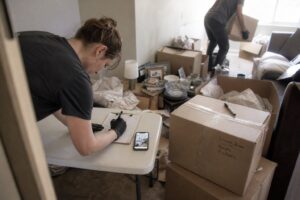 When water damage, fire, mold, or sewage affects a home, the damage does not stop at the structure. Furniture, clothing, electronics, documents, heirlooms, and personal belongings are often the most difficult part of a loss — both financially and personally.
In many situations, protecting these belongings early determines whether they can be restored or must be replaced. Removing contents from the affected property and placing them in a controlled environment is not just a precaution — it is often the difference between recovery and permanent loss.
True Day Water Damage Restoration is a licensed Utah Contractor (#960332-3505) and IICRC-Certified Firm (ID #927354-5258), based at 11268 S 2865 W in South Jordan.
Call us at (385) 247-9359.
Contents Cleaning & Pack-Out Services Near You in South Jordan, UT
We provide local contents cleaning and pack-out services throughout South Jordan (84095, 84009) and surrounding areas including Daybreak, Riverton, Sandy, West Jordan, and Salt Lake City. Our team regularly responds to winter pipe bursts, appliance failures, and storm-related flooding common across the Wasatch Front. Homes near the Jordan River corridor and lower elevation areas often experience slower drying conditions, which can affect furniture, textiles, and stored belongings even after the initial water source is removed. Removing contents early prevents secondary damage caused by humidity, airborne particles, and ongoing restoration work.Contents Damage in South Jordan Homes — What We See Most Often
In South Jordan and surrounding communities, contents damage typically follows a few consistent patterns. Winter pipe bursts — especially in homes with plumbing routed through exterior walls or uninsulated garage ceilings — can release water for hours before detection, soaking flooring, furniture, and stored belongings. In newer Daybreak homes, engineered wood flooring and dense insulation systems can trap moisture longer than expected. Upholstered furniture, rugs, and textiles often absorb moisture without visible surface damage, which leads to delayed deterioration if not removed early. Time matters here. Delays increase loss.Why Pack-Out Protects Your Belongings and Your Insurance Claim
Personal property left inside a damaged structure continues to deteriorate. Smoke particles, moisture, mold spores, and airborne contaminants settle deeper into materials with every hour they remain exposed. For example, contents exposed to smoke from a fire in a South Jordan home can absorb odor compounds quickly, especially during winter inversion conditions when air movement is limited. Materials like fabrics, leather, and paper products become increasingly difficult to restore the longer they remain in place. Pack-out also protects your insurance claim. A complete inventory — including photographs, descriptions, and condition reports — provides adjusters with the documentation required for accurate evaluation. Without it, homeowners often recover less than the full value of their belongings.Our Contents Cleaning & Pack-Out Process
Step 1 — Detailed Inventory: Every item is photographed, described, and categorized before removal. Step 2 — Careful Packing: Belongings are wrapped, padded, and labeled by room to maintain full tracking. Step 3 — Secure Transport: Contents are transported to our dedicated cleaning and storage facility. Step 4 — Professional Cleaning by Category:- Furniture and hard surfaces: cleaned, restored, and inspected
- Clothing and textiles: professionally laundered and deodorized
- Electronics: evaluated before restoration or use
- Documents and photographs: preserved using specialized techniques
- Valuables and collectibles: handled carefully or referred to specialists when required
How Professional Contents Cleaning Works
Different materials require different cleaning approaches. Applying the wrong method can permanently damage salvageable belongings. Ozone treatment is used for durable items that can tolerate oxidation. It breaks down odor-causing compounds at a molecular level and is particularly effective for smoke contamination. Hydroxyl generation is used for more sensitive contents. It produces a controlled reaction that neutralizes odor compounds without damaging fabrics, finishes, or delicate materials. In South Jordan homes affected during winter inversion periods, reduced airflow allows odor compounds to linger longer. In these cases, extended hydroxyl treatment combined with controlled ventilation produces better long-term results than ozone alone. The method matters. The timing matters. The environment matters.A Contents Pack-Out Project in South Jordan, UT
In January 2024, we responded to a home near the Daybreak community following a burst pipe during a cold overnight freeze. Water had been running for several hours before detection, affecting flooring, furniture, and stored belongings. One of the primary challenges was hidden moisture. Several items appeared dry but showed elevated readings when tested. Upholstered furniture and rugs had already begun absorbing moisture and odor compounds. We completed a full pack-out within 24 hours, removing all affected contents before structural drying began. Upholstered items were restored using controlled drying and hydroxyl-based treatment, while hard surfaces were cleaned using appropriate restoration methods. The home required multiple days of structural drying. Because contents were removed early, all major belongings were successfully restored, and no secondary loss occurred. The homeowner avoided additional replacement costs and returned items to the home without residual damage or odor.Local Experience in South Jordan and the Wasatch Front
Our work is based in South Jordan and the surrounding Salt Lake County communities. We understand how regional conditions affect both structural damage and personal property. Rapid temperature changes, seasonal moisture patterns, and modern building materials all influence how damage spreads. These factors determine how quickly contents must be removed and how they should be treated during restoration. Experience in these local conditions allows us to make better decisions early — which directly improves outcomes.What Homeowners Notice First
Most homeowners do not focus on the structure first — they focus on what is inside it. Furniture, clothing, and personal belongings carry value that cannot always be replaced. There is often uncertainty about what can be saved and what cannot. Our role is to remove that uncertainty quickly, protect what is still recoverable, and guide the process so nothing is lost unnecessarily. Clear decisions early lead to better results later.Frequently Asked Questions — Contents Cleaning & Pack-Out
- What happens to my belongings during pack-out?
- Contents are inventoried, photographed, and recorded before removal. Items requiring specialized treatment are assessed by appropriate specialists. All items are stored securely during structure restoration. Pack-out and storage costs are covered under the contents portion of the insurance claim for covered events.
- Can smoke-damaged electronics be restored?
- Sometimes. Electronics exposed to smoke may be professionally cleaned. Electronics exposed to moisture should not be powered on before professional assessment — powering on wet electronics produces short circuits that destroy hardware and data. A certified electronics restoration specialist can disassemble, dry, and clean circuit boards.
- Can wet documents and photographs be saved?
- Within a window. Freeze-drying — lyophilization that removes moisture through sublimation — is effective up to approximately 48 hours after water contact. After that window, paper fiber breakdown and mold colonization accelerate rapidly. Separate wet paper items and identify them for freeze-drying assessment within 24 hours.
Related Services
True Day Water Damage Restoration 11268 S 2865 W, South Jordan, UT 84095 (385) 247-9359
Certified
Firm
What True Day guarantees on every job
What happens to your furniture, clothes, and personal items during a loss
Water-damage coverage on your Utah homeowners policy has two sides: the building itself (Coverage A) and your personal property (Coverage C). The restoration contractor usually handles both — but the workflow for contents is different from the workflow for structure, and homeowners rarely get told how it actually runs.
Three ways we handle contents on a water loss
What gets restored vs. replaced, by item type
| Item Type | Decision Pattern |
|---|---|
| Upholstered furniture | Light Cat 1 wetness: cleaned at our facility and returned. Cat 2+: usually replaced (the fabric and foam absorb contamination into pads we can’t fully clean through). |
| Wood furniture (solid) | Usually restored — careful drying, refinishing of water marks. Lead times 2-6 weeks depending on refinishing scope. |
| Particleboard / MDF furniture | Rarely saved. Particleboard swells and doesn’t recover. IKEA-style pieces usually replaced. |
| Clothing & soft goods | Professional dry-cleaning or specialized laundry at our facility. Items returned on hangers / folded. Save rate on everything except Cat 3 is usually 90%+. |
| Electronics | Immediate power-off, dry-out, and specialized electronics-restoration service. Mixed results — TVs and audio: often saved. Laptops with liquid intrusion: often total loss. We assess each item. |
| Books, documents, photos | Freeze-dry service for anything you want saved (see separate block on documents and photos). Standard dry-cleaning destroys most paper. |
| Rugs (area rugs) | Wool and natural fiber: specialty cleaning at a rug restoration vendor, usually saved. Synthetic Cat 2+: usually replaced. |
| Mattresses | Rarely saved. Mattresses hold water in materials we cannot access, and Utah insurers typically replace rather than attempt restoration. |
Family photos, documents, and keepsakes: there’s a 48-hour window
Furniture, flooring, and drywall all have replacement value — insurance pays for them. Your grandmother’s wedding photo album does not have a replacement value. Here is what to do in the first 48 hours after any water loss to maximize the chance of saving irreplaceable paper and photo items, and what we do about them after.
The first 48 hours — what you do
- Separate what matters. Walk the affected area with a laundry basket or clean box. Pull out: photos (loose or in albums), legal documents (birth certificates, passports, wills, deeds, titles), financial records (receipts you need, tax documents in paper form), handwritten letters, children’s artwork, anything that would hurt to lose and cannot be re-ordered.
- Do not try to separate stuck-together photos. Wet photos stuck face-to-face will tear if you pull them apart. Keep them wet until a professional can process them.
- Do not try to dry documents with heat. No hair dryers, no oven, no sunlight. Heat accelerates ink bleed and paper warping. Air-dry only, flat, in a cool room.
- Freeze what you cannot dry fast enough. Zip-lock photo albums, documents, and papers into gallon bags and put them in the freezer. Freezing stops microbial growth and ink migration. Items in a freezer are stable for weeks until a freeze-dry service can process them.
- Call us and name the items. Tell dispatch what you have (albums, boxes of documents, a stamp collection, a signed book) so the lead tech brings bagging and the right documentation protocol on arrival.
What we do about it
Photos, albums, and important documents go to a specialized freeze-dry restoration vendor we work with for Utah losses. Freeze-drying (vacuum sublimation) is the only reliable technique for recovering wet paper and photographic emulsion without destroying the medium. The process takes 2-6 weeks depending on item count. Save rate for items brought in during the 48-hour window is typically 80-95%; after 7+ days of wet dwell, the rate drops to 30-50%.
Freeze-dry service costs are typically covered under your Coverage C personal property line, with the same inventoried documentation we provide for all contents handling. We photograph every item at intake and at return, and the vendor provides condition notes on each piece.
What cannot be saved
- Thermal (fax) paper — the heat-sensitive coating runs permanently when wet.
- Documents printed on inkjet printers that got hit by Category 3 water — contamination compromises the paper and the ink.
- Items that have grown visible mold before intake (we can sometimes save them with specialty treatment, but the save rate is low).
- Chemical-treated specialty papers — some archival papers and some older photographic processes don’t survive freeze-dry.
Contents pack-out — frequently asked questions
Our 6-step contents pack-out process
A pack-out is a chain-of-custody job. The homeowner is handing a crew access to everything they own and trusting that it all comes back intact. Here is how the sequence is run so nothing gets lost, mixed up, or damaged in handling.
Room-by-room photo inventory
Before anything moves, we photograph each room from four corners and document pre-existing condition on affected contents. The photo log is attached to the claim file; the carrier and the homeowner get a copy.
Category sort — salvageable, cleanable, non-salvageable
Items are sorted into three categories against IICRC S500 criteria: salvageable without cleaning (dry, undamaged), cleanable (soft goods, hard goods needing wipe-down), and non-salvageable (porous items contaminated by Category 3 water or long-exposure Category 2). Non-salvageable items are documented item-by-item for the carrier before disposal.
Labeled packing with box-level manifest
Every box is numbered, barcoded, and tied to the room it came from. The manifest tells us at any point where any item lives. No “miscellaneous box” labels — the manifest line names what’s inside at the category level.
Off-site cleaning matched to material
Soft goods (clothing, linens) get laundered or dry-cleaned by material; hard goods (books, electronics, kitchenware) get wiped, ultrasonic cleaned, or ozone-treated by what the material tolerates. Different cleaning chemistries for different materials — the pack-out log tracks which method each item received.
Climate-controlled storage during rebuild
Boxes stay in a conditioned storage environment while the home is being dried and rebuilt — not in a trailer in a parking lot. Temperature and humidity are logged. Access is tracked.
Reinstallation with signed verification
Contents go back room by room, matched to the inventory. The homeowner signs off that each room matches the pre-loss photos, and we document anything that didn’t come back right so the carrier can address it immediately.
Contents checklist — what stays, what packs out, what goes
On a pack-out scope, every item in the affected area gets categorized into one of three buckets. Here’s how we sort — and what you decide vs. what we decide.
Stays in home during work
- Hardwood furniture + sealed finishes NOT in the directly affected area
- Items on upper levels (if the loss is contained to lower level)
- Items too large to safely move (large pianos, armoires — we work around them)
- Essential daily-use items (your toothbrush, prescription meds, keys, work laptop)
- Pets + their immediate necessities
- Legal documents + irreplaceables you want in your personal control
Packs out to our facility for cleaning + storage
- Clothing + textiles from affected rooms (commercial wet-cleaning)
- Hardwood furniture in affected area (clean + sanitize at facility)
- Electronics not directly water-damaged (clean + test)
- Books + documents in salvageable condition (specialty cleaning or freeze-dry referral)
- Dishes + kitchenware (commercial dishwasher cycle)
- Decorative items + knick-knacks (hand clean + inventory)
- Artwork + framed pieces (packed carefully; may refer to conservator)
Discarded per S500/S520
- Upholstered furniture that absorbed Cat 2 or Cat 3 water
- Mattresses + box springs from Cat 2 or Cat 3 affected rooms
- Carpet pad + rugs from the affected area (Cat 2/3)
- Food items that may have been contaminated
- Open personal-care products in affected bathrooms
- Pet food + bedding in affected areas
- Any item with visible mold growth
You decide, we recommend
- Sentimental items where cost of cleaning exceeds replacement value — you choose
- Older electronics that may or may not work post-cleaning
- Books in salvageable condition where freeze-drying would cost more than replacement
- Items with ambiguous Cat 1 vs. Cat 2 exposure
Inventory + documentation
Every item packed out is photographed + logged by room of origin. You receive a copy of the inventory. If anything is missing or damaged during the pack-out and storage phase, it’s on the inventory for insurance purposes.
Contents after a mold event — clean, decontaminate, or replace
Contents in a mold-affected room fall into three categories. The decision depends on material type and the degree of exposure, not just whether the item looks dirty. Here is the item-by-item logic:
| Item type | Clean (keep) | Decontaminate (clean + verify) | Replace |
|---|---|---|---|
| Hard-surface items (metal, glass, ceramic, hard plastic) | HEPA vacuum + wipe with antimicrobial | Add surface swab if sensitive occupant | Rare — only if structurally compromised |
| Finished wood (sealed furniture, cabinetry) | HEPA vacuum + wipe, inspect for growth on surfaces | Repeat clean + verify | If growth has penetrated the finish into the wood |
| Unfinished wood (porous) | Rare — some items with surface-only exposure | Specialty cleaning + sealing after | Default — porous wood with growth is usually replaced |
| Soft goods (upholstered furniture, mattresses, pillows) | Rare — only lightly exposed cleanable fabrics | Textile restoration cleaner, specialty wet-cleaning | Default for mattresses, pillows, cushions with embedded exposure |
| Clothing + washable textiles | Hot wash cycle, hot dryer | Add antimicrobial additive if moderate exposure | If visible growth on fabric after cleaning attempts |
| Paper (books, photos, documents) | Lightly exposed — pages can be aired | Freeze-drying for valuable items | Heavily exposed books; paper is a cellulose food source |
| Electronics | Exterior HEPA vacuum + wipe | Professional electronic cleaning for powered-off items | Any item that ran during active contamination |
Pack-out — removing contents from the home for off-site cleaning — is reserved for cases where the containment is extensive, the mold species is sensitive (sensitive occupants or Stachybotrys), or in-place cleaning cannot be done without re-contaminating. For most mold jobs, contents stay in place and are cleaned in zones as the remediation proceeds. The homeowner reviews the save-vs-replace decisions for sentimental items specifically.
How the pack-out inventory is actually built and tracked
A pack-out removes contents from your home for off-site cleaning or storage. The inventory process matters because every item that leaves needs to come back, be documented as salvage/replace, or be accounted for. Here’s the sequence:
Pack-out is paperwork-heavy for a reason: when the house gets rebuilt, your things need to come back accounted for. Shortcuts on inventory are how items go missing.
Electronics in a mold-affected space — recovery vs replacement
Electronics in a mold-exposed room get treated differently than other contents. The surfaces of circuit boards and heat-dissipation fins hold onto spores and biofilm in ways that aren’t obvious. Here’s how we evaluate each category:
For every electronic item, we document the pre-exposure estimated value, the exposure level during the event, and the clean-or-replace recommendation with reasoning. Insurance claims support both; the homeowner chooses with the information in front of them.
Documents and photos — freeze-drying as the specialty rescue
Wet paper is one of the most time-sensitive contents issues. Documents, photographs, books, and artworks can be saved if the process starts quickly enough. Here is the honest version of what can be recovered and how:
Mold-exposed belongings — what can usually be saved
Not everything in a moldy room is a loss. Here is how contents usually sort out:
Off-site contents storage — five questions to ask any restorer
When belongings leave your home during a pack-out, where they go matters as much as how they are cleaned. Ask these before you sign:
We answer all five in writing as part of any pack-out scope.
Belongings touched by sewage
- Hard items (metal, glass, ceramic, hard plastic) can usually be cleaned and disinfected.
- Washable clothing and textiles may be saved with professional cleaning — not in your home washer.
- Mattresses, upholstered furniture, stuffed toys, paper, and cardboard are usually lost.
- Food, medicine, and cosmetics that sewage touched are thrown away.
Everything is photographed and listed before it’s discarded.