
Biohazard cleanup from True Day Water Damage Restoration: PPE, containment, and EPA-registered disinfectants. Based in South Jordan, UT and serving the Salt Lake Valley — live-answered 24/7 at (385) 247-9359. IICRC Certified Firm #927354-5258, Utah license #960332-3505.
Our warranty at a glance
Warranty call goes to Michael Bass personally. (385) 247-9359.
2020
Biohazard Cleanup Services in South Jordan, UT
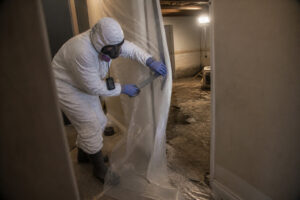 Some calls we receive are about property damage. Some calls are about something harder than that — the circumstances that leave a family standing outside a home they cannot re-enter, trying to understand what happens next in a situation they never anticipated and were never equipped to handle alone.
Biohazard cleanup sits at the intersection of technical rigor and human sensitivity. The technical requirements are non-negotiable — bloodborne pathogen protocols, regulated waste disposal, EPA-registered hospital-grade disinfection, and personal protective equipment matched to the specific biological hazard present. The human requirements are equally non-negotiable: discretion, directness, and the kind of professional composure that helps families make clear decisions in difficult moments.
True Day Water Damage Restoration is a licensed Utah Contractor (#960332-3505) and IICRC-Certified Firm (ID #927354-5258), based in South Jordan. We provide professional biohazard cleanup throughout Salt Lake County — handling these situations with the training, equipment, and care they require.
Call us at (385) 247-9359 for immediate assistance.
Biohazard Cleanup Services Near You in South Jordan, UT
We provide local biohazard cleanup services throughout South Jordan, UT (84095, 84009) and surrounding areas including Daybreak, Riverton, Sandy, West Jordan, and Salt Lake City. Our team responds quickly along major routes like Bangerter Highway and Redwood Road, ensuring fast arrival times when urgent cleanup is required. Whether the property is located near the Jordan River corridor, residential neighborhoods in Daybreak, or commercial areas in Salt Lake County, we are equipped to handle sensitive and hazardous cleanup situations safely, discreetly, and professionally.What Is Considered Biohazard Cleanup in South Jordan, UT
A biological hazard — or biohazard — is any biological substance that poses a threat to human health. These situations require specialized handling, containment, and disinfection beyond standard cleaning practices.Bloodborne Pathogen Cleanup
Blood and bodily fluids may carry infectious pathogens including Hepatitis B, Hepatitis C, and HIV. These pathogens can survive on surfaces and require EPA-registered disinfectants and proper PPE to eliminate safely.Unattended Death and Decomposition Cleanup
Decomposition produces hazardous fluids and gases that penetrate deep into structural materials. Cleanup requires removal of affected materials, disinfection, and odor neutralization using professional methods such as odor removal services.Sewage Biohazard Cleanup and Black Water Contamination
Sewage contamination introduces bacteria, viruses, and parasites into a structure. This requires full removal of contaminated materials and professional sewage cleanup services to restore safety.Rodent Infestation and Animal Waste Cleanup
Rodent contamination may expose occupants to airborne pathogens such as Hantavirus. Proper containment and HEPA filtration are required to safely remove contamination.Why You Should Never Attempt Biohazard Cleanup Yourself
Biohazard cleanup is not a standard cleaning task. Attempting to handle these situations without proper equipment and training exposes individuals to serious health risks.- Pathogen exposure: Bloodborne pathogens can survive for days on surfaces.
- Toxic gases: Decomposition releases hazardous airborne compounds.
- Improper disposal: Biohazard waste must be handled according to regulations.
24/7 Emergency Biohazard Cleanup Response
Biohazard situations require immediate action. We provide 24/7 emergency biohazard cleanup services in South Jordan and nearby areas with rapid response times. Our team is equipped to handle trauma scenes, sewage contamination, and hazardous environments safely and efficiently. Learn more about our emergency services.Our Biohazard Cleanup Process
Our process follows strict safety and regulatory standards to ensure complete decontamination.- Assessment and hazard identification
- Containment and air filtration
- Removal of contaminated materials
- EPA-registered disinfection
- Odor elimination and air purification
- Structural drying and restoration
A Biohazard Cleanup Project in South Jordan, UT
In early 2024, we were called to a property near the Daybreak area following an unattended death. The family had not re-entered the home due to the severity of the situation. Upon assessment, we identified contamination extending beyond the visible area. Decomposition fluids had migrated into the flooring and subfloor. Using thermal imaging, we mapped the affected areas and confirmed the full scope. Our team removed all impacted materials, performed multi-stage disinfection, and applied thermal fogging and hydroxyl treatment to eliminate odor compounds. The property was restored to a safe condition within four days, allowing the family to return without health concerns.What Families Experience in These Situations
Biohazard situations are often unexpected and emotionally difficult. Families are dealing with more than just property damage — they are navigating complex personal circumstances. Our role is to bring clarity and structure into that moment. We explain the process clearly and handle the work discreetly, allowing families to focus on what matters while we restore the property safely.Specialized Training and Field Experience
Our technicians are trained in advanced biohazard remediation protocols, including bloodborne pathogen handling, PPE usage, containment procedures, and regulated waste disposal. With real-world experience across South Jordan and Salt Lake County, we understand how to assess and resolve complex situations efficiently and correctly the first time.Frequently Asked Questions — Biohazard Cleanup
Do you offer biohazard cleanup near me in South Jordan?
Yes, we provide local biohazard cleanup services throughout South Jordan and nearby communities with fast response times.How much does biohazard cleanup cost?
Costs vary depending on the level of contamination and materials affected. We provide clear estimates after assessment.Is biohazard cleanup covered by insurance?
Coverage depends on the situation. We assist with documentation and claims. See our insurance claims page.Related Services
Call True Day for Biohazard Cleanup in South Jordan, UT
True Day Water Damage Restoration 11268 S 2865 W, South Jordan, UT 84095 Phone: (385) 247-9359 Email: info@truedaywaterdamagerestoration.xyz Utah Contractor License: #960332-3505 IICRC Certified Firm ID: #927354-5258Certified
Firm
What True Day guarantees on every job
Biohazard cleanup FAQ
What we handle, how we handle it, and what we tell families up front.
What kinds of situations do you handle?
Do I need the police report or coroner release first?
Will insurance cover biohazard cleanup?
What’s involved in a biohazard job?
How is this different from a regular cleaning crew?
Keeping pets and kids safe while we’re on site
Honest guidance for what children, elderly, and pets should do (or avoid) during each phase of a restoration job.
Normal supervision — just mind the cords
No microbial risk from the water itself. Kids and pets can be in adjacent rooms while equipment runs. Trip hazards and 85 dB noise are the real risks — route air-mover cords along baseboards, close the affected room’s door when equipment is on, keep pets from chewing containment plastic.
Keep out of the affected area until decontaminated
Pathogen content is low but present. Children and immunocompromised occupants should stay out of the affected rooms until antimicrobial treatment is complete — usually day 2 or 3. Pets especially: dogs will drink from the sump pit, cats will walk through drip zones.
Strict occupant relocation from the affected zone
Full containment with HEPA scrubbers running under negative pressure. The affected area is sealed with 6-mil poly. Children, pregnant occupants, immunocompromised, and all pets should stay outside the containment until post-remediation verification clears the space.
Sensitive occupants relocate during containment-breakdown phase
Containment prevents cross-contamination during the work, but when we take the containment down at closeout, disturbed spores can briefly go airborne. Asthmatic, pregnant, immunocompromised, or very young occupants should be out of the house during the containment-breakdown day — usually 2–4 hours.
Common pet hazards during a drying job
Cats will unplug air movers (we tape cables to the floor). Dogs will drink from the sump pit or chew containment plastic. Both are attracted to the warm exhaust air from LGR dehumidifiers — trip risk if they curl up behind one. If you can confine pets to a non-affected room during drying, do it.
If anyone in your home has a respiratory condition, immune compromise, or is pregnant, tell us at the inspection. We adjust containment and scheduling to minimize their exposure. (385) 247-9359.
Biohazard cleanup: when it is us, when it is a specialized subcontractor
Biohazard cleanup covers a specific range of scenarios where biological contamination is present at levels requiring OSHA bloodborne pathogen protocols, regulated-waste disposal, and PPE beyond what standard water-damage work requires. Our scope covers some biohazard scenarios directly and refers others to specialized trauma cleanup firms. Here is the honest division of what we handle and what we don’t.
What we handle directly
- Category 3 sewage cleanup — the biggest biohazard scenario we see routinely. Sewage backup, toilet overflow with waste, septic failures, rising groundwater with sewage contamination. Full S500 Category 3 protocol applies.
- Rodent and bird contamination remediation — attic contamination from rodent nesting, droppings in HVAC systems, bird infestation in soffits or chimneys. Hantavirus and histoplasmosis considerations apply; we work with full respiratory PPE and HEPA containment.
- Blood or body-fluid contamination from accidents or injuries — household accidents, workplace injuries, kitchen or garage accidents. OSHA bloodborne pathogen protocol applies.
- Odor remediation on biohazard-source losses — the odor-removal protocols from our odor-removal services apply after biohazard mitigation is complete.
What we refer to specialized trauma cleanup firms
- Crime scene and trauma scene cleanup — specialized trauma cleanup firms carry specific trauma-scene training and often work directly with law enforcement and medical examiner coordination. We refer to a Utah-based trauma firm we have worked with on handoff scenarios.
- Unattended death cleanup — specialized decomposition cleanup requires additional training and equipment we do not carry. Refer out.
- Suicide scene cleanup — handled by trauma firms with victim-advocacy coordination. Not our scope.
- Hoarder cleanouts — hoarding cleanup is a mental-health-adjacent scope that specialized firms handle better. We refer out.
- Methamphetamine lab remediation — Utah has specific decontamination requirements for suspected or confirmed meth lab contamination. Requires state-approved contractors; we are not currently on that list.
PPE and protocol for biohazard scopes we handle
- P100 respirators for all technicians in the work area. Full-face respirators for aerosolization-risk scopes.
- Tyvek body suits with hoods and taped seams at wrists and ankles.
- Double nitrile gloves changed after any decontamination phase.
- Dedicated boot covers or boots that stay in the work zone.
- Full containment with poly, zippered entry, HEPA negative air. Separate decontamination corridor at entry.
- Regulated biohazard-waste disposal — contaminated materials go into red-labeled biohazard bags, picked up by a Utah-licensed medical waste disposal vendor (not standard dumpster disposal).
- Vehicle decontamination — our trucks that transport biohazard waste get decontaminated between jobs.
Discreet arrival for sensitive scenarios
On biohazard calls where the homeowner or occupant wants a low-visibility arrival (unlabeled vehicle, no uniform signage visible from the street, no yard sign), we accommodate. Our standard trucks are branded; we can bring an unmarked vehicle for the first arrival to assess scope and begin containment setup, then handle the main work with branded trucks parked in a less visible location. The scope documentation and insurance billing still happen the same way; the visible branding is the only variable.
Biohazard cleanup — frequently asked questions
What biohazard cleanup actually covers — and where we hand off
Biohazard is a regulated category of work, not a general label. The scope that falls inside our certification and insurance is defined; what sits outside it goes to a specialist and we tell you up front which is which.
What we handle under IICRC AMRT + S500 Category 3 scope
Any grossly contaminated water loss — sewer backup, toilet overflow with waste, flood water carrying outdoor contaminants — is both an IICRC S500 Category 3 water loss and a biohazard cleanup. Negative-air containment, PPE level, HEPA scrubbing, and mandatory removal of affected porous materials follow the same protocol. Marcus Rivera (IICRC Registrant #246893) and Sofia Mendoza (#305127) hold AMRT credentials for this scope.
Small-area cleanup where blood or OPIM (Other Potentially Infectious Materials) is confined to a single room or surface — a cut, a nosebleed, a minor injury scene cleared by first responders. We follow the OSHA Bloodborne Pathogens standard: proper PPE, sharps-safe handling, EPA-registered tuberculocidal disinfectants, regulated-waste containment and manifest-tracked disposal.
Hantavirus-aware protocol for enclosed spaces with rodent evidence: ventilation first, no sweeping or vacuuming of dry waste, disinfection with 1:10 bleach solution or equivalent, protective respirator, bagged double-containment disposal.
Biohazard scopes we actually handle
Biohazard cleanup is not one job — it’s three or four very different jobs that share a safety protocol. Here is the honest breakdown so you know what you’re asking for when you call.
| Scope | What’s involved | Typical timeline |
|---|---|---|
| Unattended death | Decomposition fluids penetrate flooring, subfloor, drywall. Full PPE, OSHA BBP protocol, porous material removal, odor neutralization. Coroner releases the scene before we enter. | 1-5 days depending on duration before discovery |
| Trauma / accident scene | Blood and fluid cleanup after injury, suicide, or accident at a residence. Full PPE, chain-of-custody if law enforcement requests, antimicrobial sanitization, EPA-registered disinfectants. | 1-3 days |
| Hoarding + biohazard | Multi-week scope: contents sorting, animal waste or human-waste contamination areas, structural cleaning, pest-remediation coordination. Compassionate pacing with the resident or family. | 1-4 weeks depending on severity |
| Infectious disease cleanup | C.diff, MRSA, Hep-B exposure, bodily-fluid incidents in commercial settings. OSHA BBP standard, EPA List N disinfectants, HEPA filtration during cleaning. | Same-day to 2 days |
What we do NOT handle
Active crime scenes before law-enforcement release, meth-lab decontamination (Utah has a separate licensed-remediator program for that — we’ll refer you), or clandestine-drug-lab chemical residue testing. We will tell you plainly when a referral is the right answer.
Honest scope limits: what biohazard work we do and don’t do
Not every “biohazard” situation is the same. Some we handle in-house. Some we refer out because they need licensing, specialist training, or equipment we don’t carry. We’d rather tell you up front than take a job we can’t do properly.
| Scenario | In-house / refer |
|---|---|
| Category 3 sewage water loss (sewer backup, flooded basement with sewage) | In-house — this is core to our Water + Sewage scope under IICRC S500 |
| Rodent / bird droppings in attic or crawlspace | In-house — HEPA vacuum, antimicrobial, encapsulation, insulation replacement if saturated |
| Blood from household injury (small to moderate) | In-house with Bloodborne Pathogens protocol |
| Unattended death / decomposition | Referred out to a trauma-cleanup specialist — we don’t take this scope |
| Crime scene cleanup (post-law-enforcement release) | Referred out to a trauma-cleanup specialist |
| Hoarding remediation (gross-filth category 3) | Referred out — this needs a hoarding-specialist team and often social-services coordination |
| Methamphetamine lab decontamination | Referred out — requires Utah-certified meth-lab decontamination contractor |
| Asbestos abatement | Referred out — requires Utah-licensed asbestos abatement contractor |
Why we’re honest about this
- Unattended-death and trauma work requires specific psychological training, OSHA Bloodborne Pathogens certification at a higher level, and insurance scope we don’t carry
- Meth decon and asbestos are state-regulated scopes with their own licensing — our GC license 960332-3505 and IICRC Firm 927354-5258 don’t cover those
- Taking a job we’re not equipped for would either leave the problem unsolved or create a safety issue for our crew or the occupant
If you call us and your situation is one we don’t handle, we’ll tell you — and we’ll give you the name of a Utah-licensed company that does. Call (385) 247-9359.
Rodent and bird droppings in attics and crawlspaces — our in-house scope
Of the biohazard categories we handle in-house, rodent and bird droppings in attics and crawlspaces is the most common. Mice and roof rats are common in Salt Lake Valley attics; bird nests and droppings in attics occur in homes with gaps in soffit or roof-penetration seals. Here’s the actual scope when we take this on:
Our in-house scope
- Initial assessment: extent of contamination, structural materials affected (loose-fill insulation vs batts vs blown-in cellulose), ventilation path, confirmation that rodents are no longer active
- Rodent-exclusion coordination: if active, we work with a pest-control contractor to end the activity before cleanup — cleaning while rodents are still active just means recontamination
- Containment: poly sheeting around attic hatch; negative-air with HEPA scrubber pulling to exterior
- PPE: Tyvek suit, half-face respirator with P100, nitrile gloves, boot covers
- Controlled wetting: affected areas sprayed with EPA-registered disinfectant to prevent aerosolization
- Insulation removal: contaminated insulation bagged in heavy-duty biohazard bags for disposal; dry removal methods used only after wetting
- Surface disinfection: all affected joists, sheathing, and framing wiped with EPA-registered disinfectant
- Insulation replacement: new blown-in or batt insulation installed to original R-value spec
- Documentation: photos of pre-cleanup contamination, process steps, and post-cleanup verified clean
What we don’t do on this scope
- Pest control itself (trapping, poisoning, exclusion sealing) — that’s a licensed pest control contractor’s work
- Roof-penetration sealing beyond basic access-point sealing of attic hatch — roofers handle structural gaps
- Soffit or exterior repair if that’s where the rodents entered
Timeline + cost expectations
- Small attic (1,000-1,500 sq ft house): typically 1-2 days with 2 techs
- Medium attic (1,500-2,500 sq ft house): typically 2-3 days with 2 techs
- Crawlspace scope varies more — access difficulty is a bigger variable than square footage
- Cost depends on insulation type and amount being replaced; written estimate before work begins
Insurance coverage
- Rodent damage is generally excluded from homeowner’s insurance as “vermin damage”
- Sudden rodent death and resulting biological damage may be covered in some policies — worth asking
- Most of this scope is out-of-pocket for the homeowner; financing (Wisetack) is available
How biohazard waste leaves the site — disposal + chain of custody
Biohazard cleanup produces biohazard waste, and Utah has specific rules on how that waste is categorized, bagged, labeled, transported, and disposed. We follow the Utah Department of Environmental Quality (DEQ) protocols. Here’s what the process actually looks like for homeowners who want to understand what’s happening with their waste.
Categorization
| Category | Example | Disposal path |
|---|---|---|
| Regulated biomedical waste | Sharps, blood-contaminated materials in significant quantity | Red biohazard bags, labeled; transported by licensed medical-waste hauler; incinerated or autoclaved per Utah DEQ |
| Category 3 water-damaged materials (sewage-saturated drywall, insulation, carpet) | Standard Cat 3 cleanup waste | Heavy-duty black bags, double-bagged; transported to Utah DEQ-permitted solid waste facility; standard landfill with manifest |
| Rodent-contaminated materials (contaminated insulation, nesting materials, droppings) | Attic/crawlspace cleanup waste | Heavy-duty bags, double-bagged with sealant between layers; standard solid waste; manifest if volume is significant |
| Bulk furniture or large items | Sewage-soaked couch, Cat 3 flooring in large pieces | Cut down to bag-size when possible; otherwise rolled, wrapped, and manifest-tracked to landfill |
Chain of custody documentation
- Each disposal bag or container is labeled with job identifier (your job number) at time of bagging
- Transport manifest written when waste leaves the site (dated, signed by crew lead)
- Receiving-facility manifest signed and timestamped when waste is accepted
- Both manifests kept on file with your job records — available on request
What this means for insurance claims
- Documentation of proper disposal is part of what Cat 3 insurance claims expect to see — carriers may audit disposal practices
- “Dumping Cat 3 waste in a regular dumpster” is a compliance violation and can affect claim payment to the contractor; we don’t do it
- Your claim file includes the disposal manifest numbers (not names) so insurance can verify compliant handling
What a homeowner may notice during the job
- Multiple black bags being loaded into our vehicle — standard; they’re sealed and heavy
- A separate decontamination zone at the vehicle for bagging and loading — standard
- Crew changing out of Tyvek before leaving site — standard; prevents transporting contamination to the next location
- Written manifest form in the paperwork at job completion — standard; part of your file
What we don’t do
- Dispose of biohazard waste at your curbside trash — not legal and not safe
- Use a client’s dumpster for Cat 3 or biohazard waste unless the dumpster is specifically rated and tracked for it
- Comingle biohazard waste with non-regulated cleanup materials — separation is maintained from bagging through disposal
Biohazard vs non-biohazard scope — clearing up the confusion
“Biohazard” is a specific scope with specific protocols. Not every disgusting cleanup is biohazard, and not every “biohazard-looking” scope needs the full protocol. Here’s where the line is:
| Scenario | Biohazard? | What that means |
|---|---|---|
| Category 3 sewage water loss | Yes (bloodborne-pathogen-potential + organic contamination) | Full S500 Cat 3 PPE + containment + biohazard waste disposal |
| Rodent droppings in attic | Yes (hantavirus-potential) | Full PPE + containment + biohazard waste disposal (we handle) |
| Household blood (from household injury) | Yes (BBP applicable) | BBP protocol; biohazard waste disposal |
| Dead rodent / bird / animal | Yes (if decomposing) | Specialist handling + biohazard waste; we may refer depending on scope size |
| Pet accident on carpet (urine/feces, routine) | No (not regulated biohazard) | Standard carpet cleaning or sanitation; not our standard scope unless combined with water event |
| Mold growth | No (regulated separately as microbial, not biohazard) | IICRC S520 scope; separate from biohazard |
| Spoiled refrigerator / freezer food | No (food waste, not regulated biohazard) | Standard disposal; cleanup; sometimes we handle as part of restoration scope |
| Trash accumulation (hoarder-adjacent) | No (unless Cat 3 water-saturated or biohazard materials present) | Specialist hoarder-cleanup contractor; not our standard scope |
| Unattended-death / crime scene | Yes (bloodborne-pathogen + decomposition) | Specialist trauma-cleanup contractor; we refer |
| Vomit cleanup | Potentially (depending on source and quantity) | Small routine cleanup can be done with standard methods; large or illness-related may warrant BBP protocol |
| Fecal contamination from sewer backup | Yes | Full Cat 3 + biohazard scope (we handle) |
| Mild water damage with mild musty smell | No | Standard mitigation scope; mold inspection may follow |
Why the distinction matters
- Biohazard scope has specific regulatory + PPE requirements that drive cost + timeline up
- Treating non-biohazard as biohazard inflates the scope unnecessarily; treating biohazard as non-biohazard is a safety and compliance issue
- Insurance treats biohazard specifically — some policies have specific coverage limits or exclusions
How we classify on-site
- Visible contamination type (blood, feces, decomposition, animal remains)
- Water category if water is involved (Cat 3 sewage = biohazard by category)
- Volume / affected area
- Occupant health concerns
- Specific Utah DEQ waste-handling triggers
What we handle in-house (biohazard portion)
- Cat 3 sewage
- Household blood from routine injury
- Rodent / bird droppings in attic or crawlspace
- Decomposing animal (small; raccoon-size or smaller)
What we refer out
- Unattended death / decomposition
- Crime scene cleanup
- Large-scale hoarder cleanup
- Meth lab decontamination (Utah-certified contractor)
- Asbestos abatement
When customers ask “is this biohazard?”
- We assess on-site; honest answer either way
- If it is: we scope with proper protocol and tell you why
- If it isn’t: we scope with standard methods and don’t inflate
- Classification is on the written estimate so you can see
Where our biohazard scope starts and stops
Biohazard work covers a wide range of situations, and not everyone who answers the phone for one of them is the right call. Here is what True Day’s biohazard scope includes and what it does not — stated upfront so the right call gets made the first time:
What we do
- Sewage backups (Cat 3 water) — included under sewage-cleanup scope
- Hoarding-adjacent water or mold scenes with structural remediation
- Trauma scene post-release — once the scene has been released by law enforcement and a coroner, if applicable
- Rodent and animal infestation remediation of affected building materials
- Decontamination of structure and salvageable contents after biohazard exposure
What we don’t do
- Active crime scenes before law enforcement release
- Medical waste from licensed medical facilities (regulated medical waste requires specialty haulers)
- Rodent trapping and pest control itself — we remove affected materials, not the live animals
- Hoarding cleanouts without a structural restoration component — specialist firms handle those
- Hazmat-tier chemical spills requiring EPA emergency response
If the situation falls outside our scope, we say so on the first call and point to the right type of specialist. That is a shorter conversation than taking the job and discovering the boundary mid-work.
Biohazard job timeline — honest expectations
Biohazard remediation is almost always slower than regular restoration because of the layers of containment, documentation, and verification involved. If you’ve been told a biohazard job takes a day, that’s usually wrong. Here is the realistic timeline:
Hoarding-adjacent, trauma scene, and heavy-rodent-infestation jobs can extend each phase significantly. We give an honest timeline estimate on the first visit — not a shorter number to win the job and then update it later.
In South Jordan? Inside city limits we’re on site within 45 minutes, 24/7, or your emergency inspection is free. Michael Bass is paged on every sewage call.
Sewage cleanup or biohazard cleanup?
Sewage cleanup handles Category 3 water from drains, toilets, and floods spreading through a building — extraction, material removal, and drying.
Biohazard cleanup covers other contamination that needs special handling. Both use PPE, containment, and EPA-registered disinfectants. Not sure which you need? Call (385) 247-9359 and describe what you’re seeing.